
SMART Capture - Principles to Practice
Abstract:
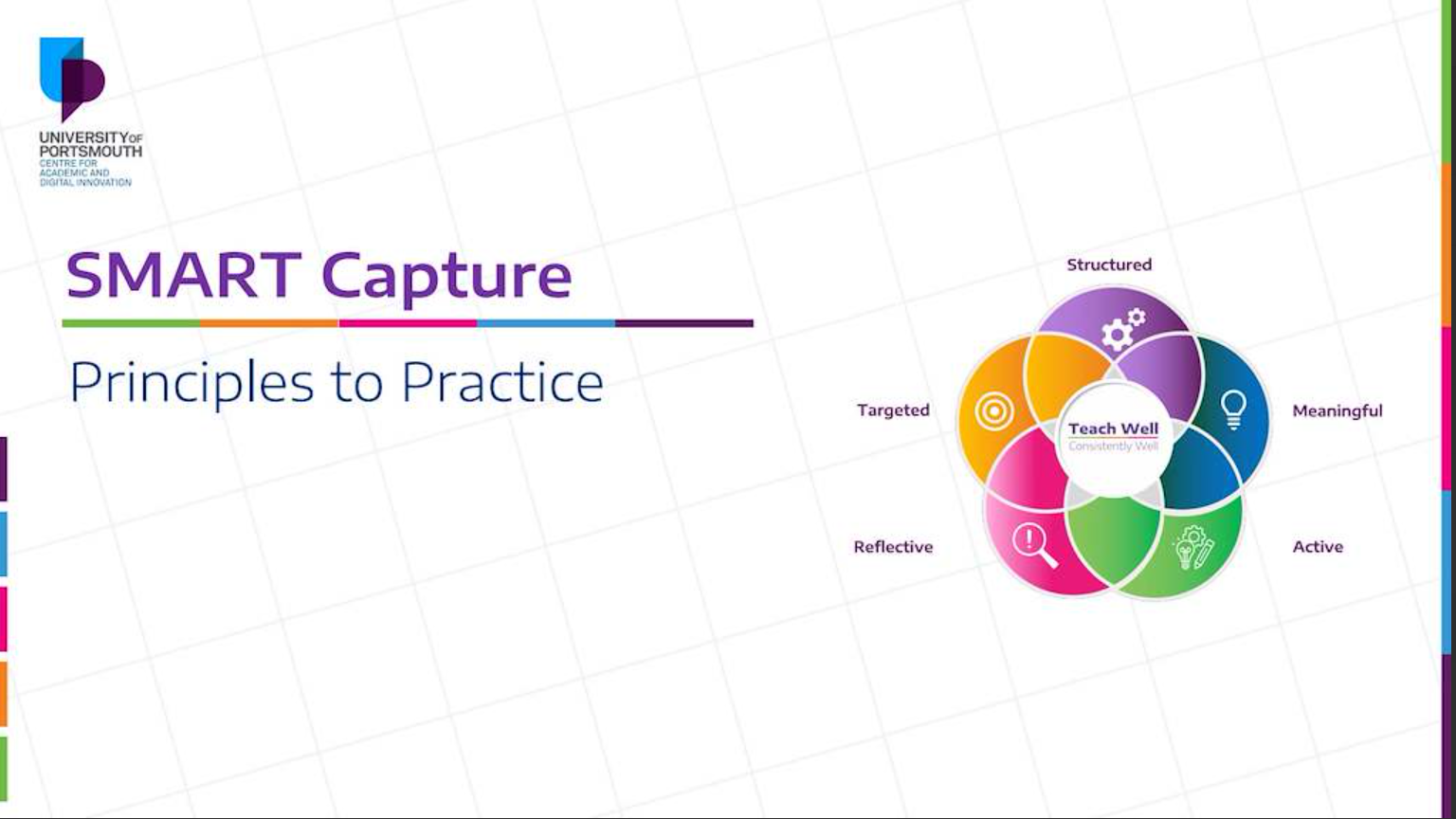
This session explores the University of Portsmouth’s evolving approach to digital learning design through the lens of SMART Capture Framework an evolved approach developed in response to the limitations of traditional content capture models. Grounded in Portsmouth’s Active Blended Learning (ABL) philosophy and the ethos of Teach Well, Consistently Well, SMART Capture places greater emphasis on context over content and refocuses attention towards purposeful digital assets that actively support learning. Rather than simply recording teaching, the framework positions digital resources as structured, meaningful, active, reflective, and targeted tools that help students engage with learning and to keep up and catch up. The session will provide a practical example from a University of Portsmouth London (UoPL) Level 4 module, exploring how SMART Capture principles can support students within intensive block delivery models. The session examines a Moodle-based approach that provides students with structured preparation activities, advance access to workshop materials, catch-up resources, and follow-up activities. Particular attention is given to how these approaches support students with disabilities, students working across languages, and those balancing study with caring responsibilities or other interruptions. Drawing on module evaluation, the session argues that structured and inclusive digital approaches can provide significant benefits without discouraging attendance or participation. Participants will also be invited to engage critically with the example through a short interactive activity, considering how the learning design could be made ‘even SMARTer’. The session concludes by arguing that SMART Capture is most effective when adopted consistently across programmes, enabling students to transition more seamlessly between modules and experience a clearer, more supportive learning journey.