
Peer observation is a collaborative and developmental approach to enhancing teaching and practice. It brings colleagues together to observe, reflect and engage in meaningful dialogue about learning and teaching. At it's best, it creates a safe and supportive space where ideas can be shared, challenged, and refined, helping staff to build confidence, explore new approaches, and continuously improve their practice.
Rather than being about judgement or performance management, peer observation is rooted in trust, openness, and mutual benefit. It recognises that some of the most valuable professional learning comes from simply talking about teaching with others who understand the context.
The Aim of Peer Observation
The purpose of peer observation is to support colleagues to Teach Well, through structured reflection and shared practice. It aims to:
- Foster open dialogue about teaching and learning
- Share and develop effective pedagogic approaches
- Build confidence and motivation in teaching practice
- Support ongoing professional development and reflection
- Provide evidence for recognition and career progression (e.g. Fellowship)
At it's core, peer observation is about learning from each other and improving the student experience through collective insight.
Key Principles
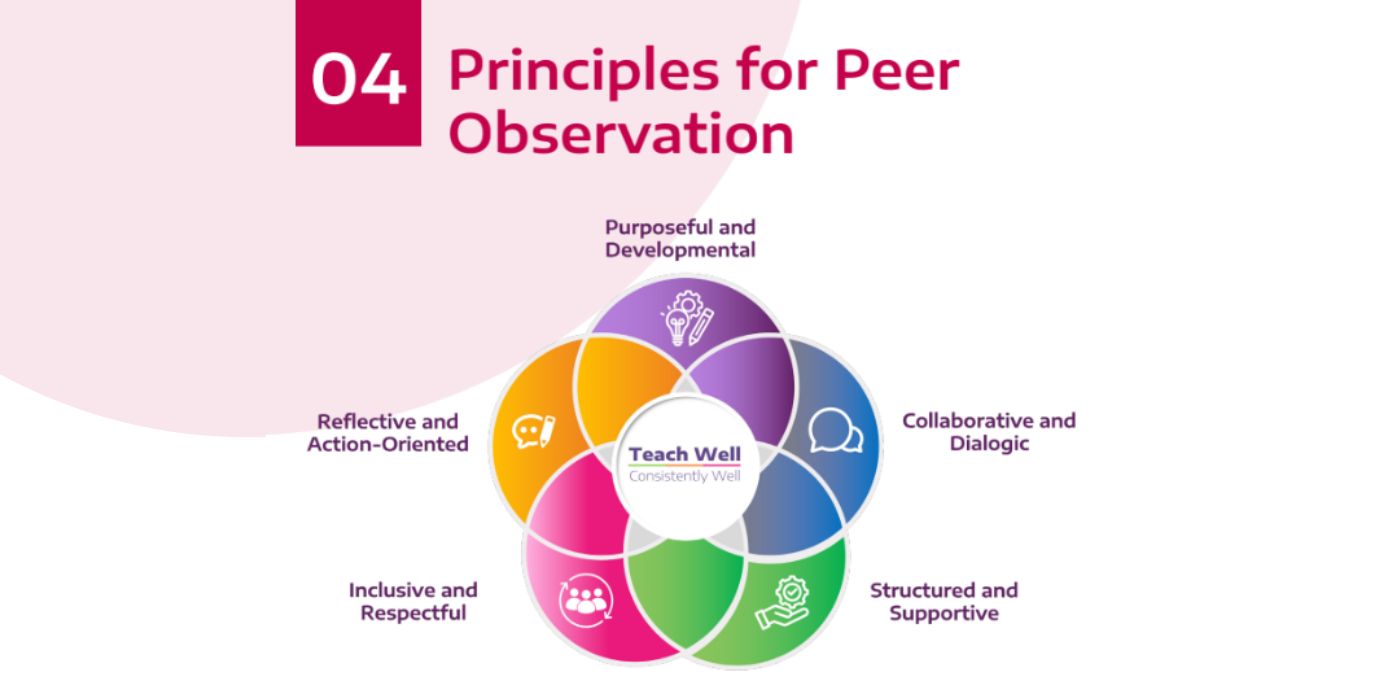
Peer observation is most effective when it is underpinned by a clear set of shared principles:
- Purposeful and Developmental – focused on growth, not judgement
- Collaborative and Dialogic – based on open, two-way conversation
- Structured and Supportive – guided by clear processes that create psychological safety
- Inclusive and Respectful – recognising different contexts, disciplines, and teaching styles
- Reflective and Action-Oriented – leading to meaningful change in practice
These principles ensure that peer observation remains a positive, constructive, and genuinely useful experience for everyone involved.
Making It Happen: The Key Stages
Peer observation follows a simple three-stage cycle that keeps the process focused and manageable:
-
Pre-Observation (Planning the Focus)
Colleagues meet to agree the purpose of the observation, the context of the session, and the specific areas for feedback. This stage builds trust and sets clear expectations. -
Observation (Noticing Practice)
The observer attends the session and gathers descriptive, non-judgemental insights aligned to the agreed focus. The emphasis is on curiosity, not evaluation. -
Post-Observation (Reflecting and Developing)
A structured conversation explores what worked, what was noticed, and what could be developed further. Together, colleagues identify practical next steps to enhance teaching.