Effective group work starts with purposeful design and clear support.
Groupwork is a powerful and widely used approach in higher education, valued for its potential to foster deep learning, collaboration, and essential employability skills. When designed well, it challenges students to solve complex, real-world problems, develop their communication and teamwork abilities, and gain insights from diverse perspectives. However, groupwork is not without it's challenges. Without careful planning and support, it can lead to frustration, disengagement, and perceptions of unfairness.
The CADI Groupwork guide introduces five core principles to help staff design group activities that are inclusive, purposeful, and effective. These principles provide a practical framework for planning, supporting, and reviewing group work so that both staff and students can approach it with confidence.
Most importantly, this guide is about making groupwork work - not as an add-on activity, but as a meaningful part of learning that supports collaboration, fairness, and real-world skill development.
The framework is designed to support you at every stage - from setting purposeful tasks and forming balanced teams, to scaffolding collaboration, ensuring fair assessment, and stepping in when things go wrong. Each principle, comes with tips, scenarios, and tools to help you put ideas into practice, whether you're new to groupwork or refining your existing approach.
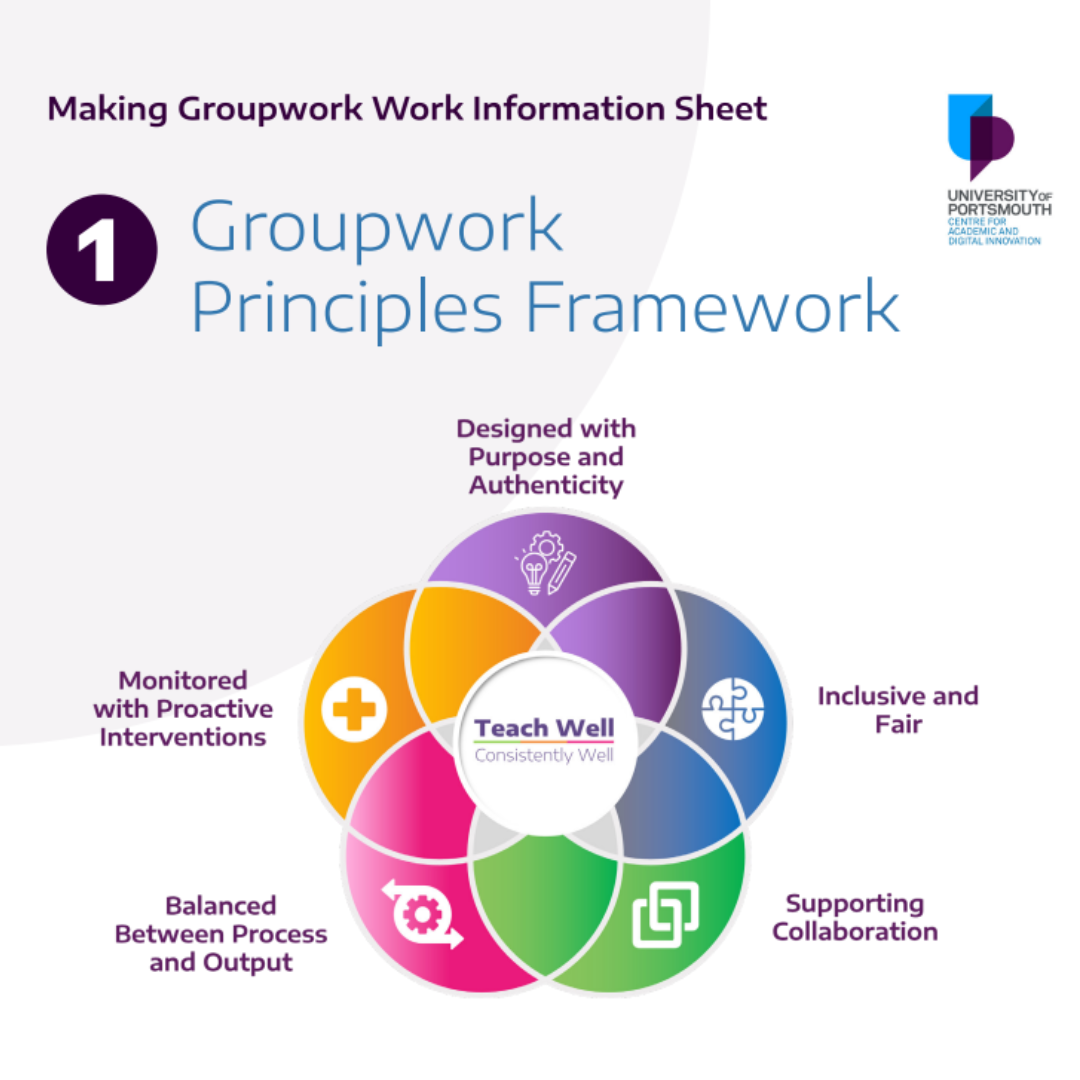
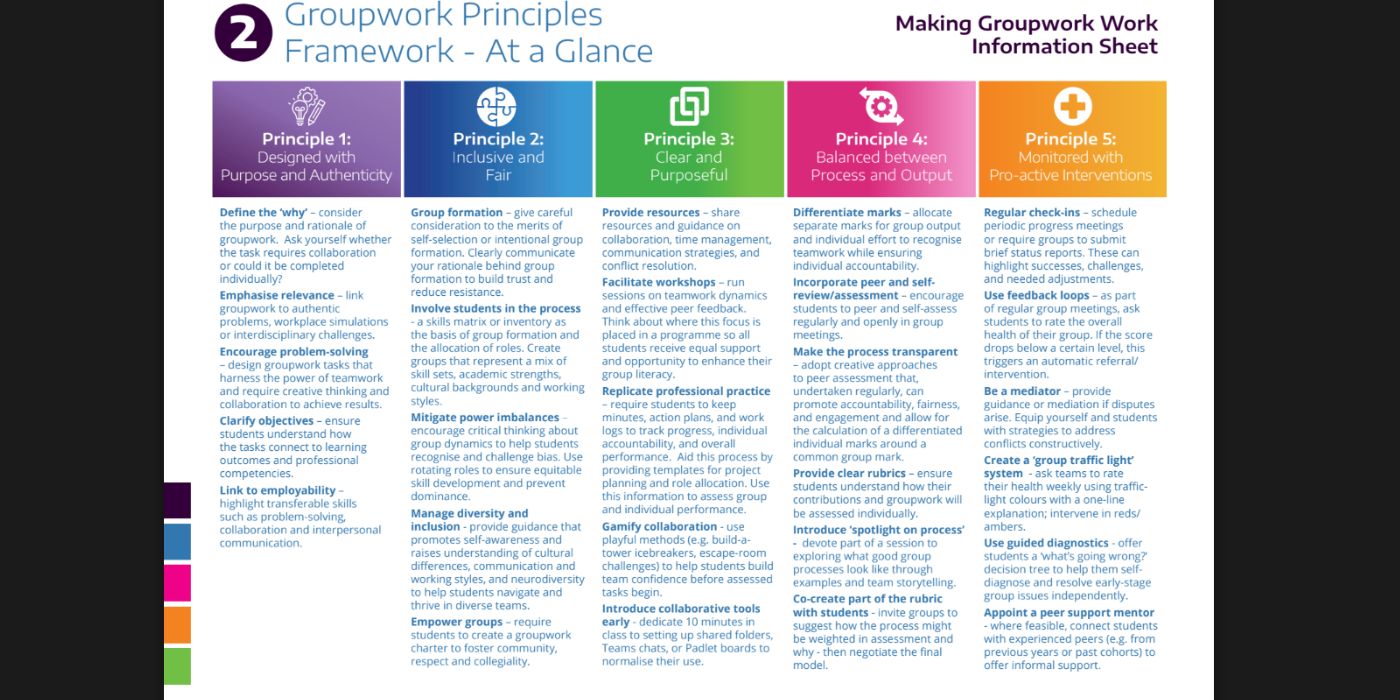
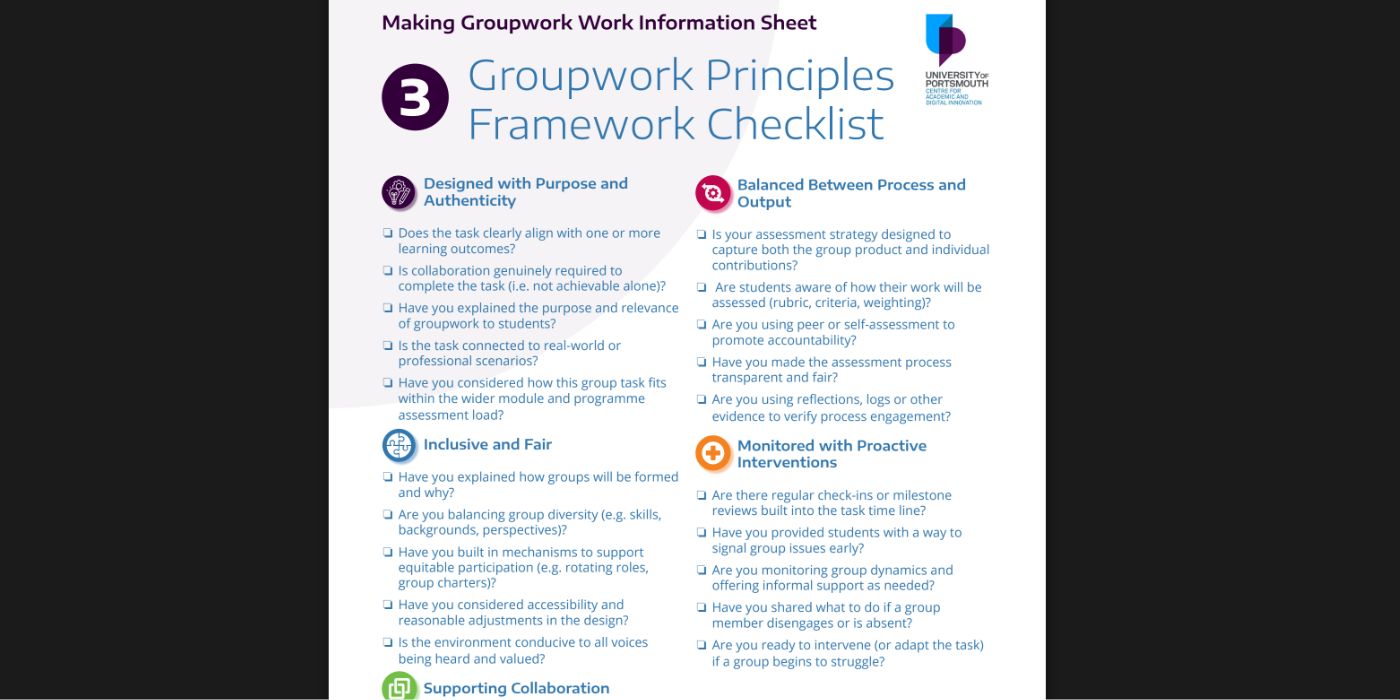
Designed with Purpose and Authenticity
Group tasks should have clear purpose, align with learning outcomes, and reflect real-world practice.
Inclusive and Fair
Groups should be thoughtfully formed so every student has a role, a voice, and an opportunity to contribute.
Supporting Collaboration
Students need guidance and tools to develop teamwork skills, not just expectations to "work together."
Balanced Between Process and Output
Assessment should recognise both what groups produce and how they work together.
Monitored with Proactive Interventions
Regular check-ins help identify challenges early and keep groups on track.
These principles form the backbone of the Groupwork Principles Framework, supporting educators at every stage - from planning tasks to managing challenges and ensuring fair outcomes.
Why This Matters
Groupwork is more than a teaching strategy - it is a key part of developing employability skills, building confidence, and supporting deeper learning. When designed with care, it strengthens engagement, encourages shared responsibility, and helps students learn how to collaborate effectively in complex environments.
Used well, group work creates learning experiences that feel purposeful, fair, and genuinely worthwhile - for both students and staff.